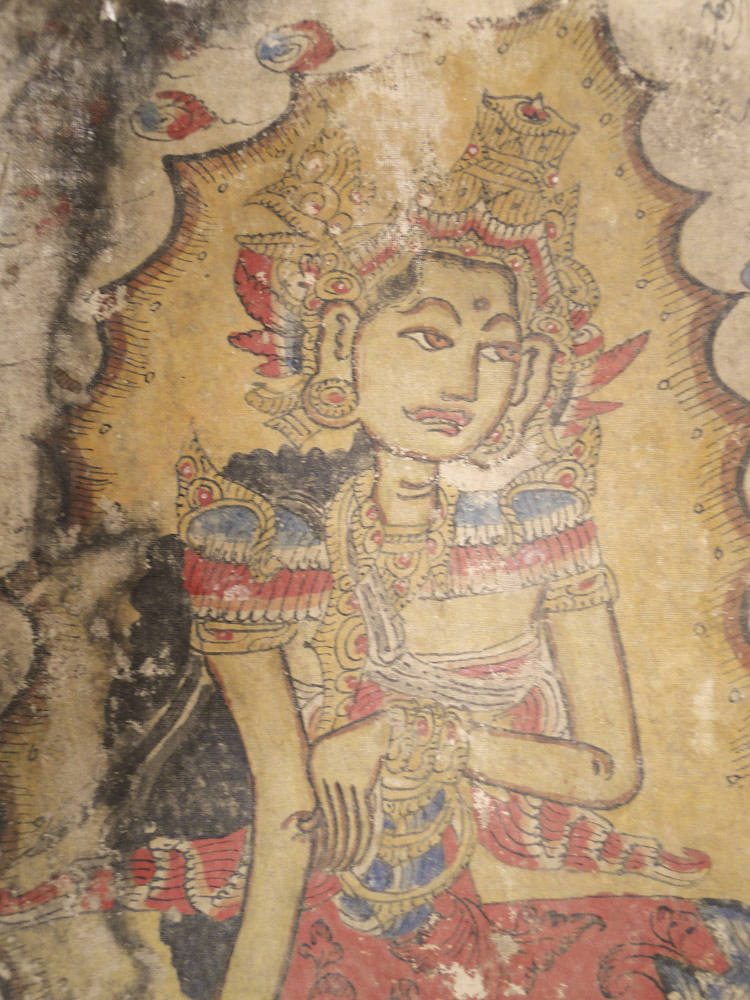
The grandeur of classical Balinese wayang painting, which once reached the pinnacle of its civilization, serves as the forerunner of Balinese painting today. Its canonical values, forged as resilience across centuries, have never faded with the heat nor washed away by the rain, enabling it to endure to the present day.
Definition
The word wayang is synonymous with bayang (shadow; in Sanskrit, b = w), which carries two meanings: first, the actual shadow cast by a lamp during a wayang kulit (shadow puppet) performance; and second, the reflection of human character traits projected into symbolic manifestations with ornamental forms bound by the traditional norms of Balinese society. Symbolic meaning in wayang is reflected in both individual anatomical details and the overall form of existing figures, whether rendered as statues, reliefs, shadow puppets, paintings, or other media. Popular wayang narratives drawn from the Ramayana, Mahabharata, or other stories are chosen because of the dense values and meanings embedded within them—rich in ethics, philosophy, education, and virtues that serve as vital guidelines for navigating life in this world.
The art of wayang is the most comprehensive art form, spanning multiple artistic disciplines: literature, vocal arts, dance and gamelan percussion, as well as fine arts including sculpture, carving, and painting. Such is the essence of wayang in Balinese life—timeless across the passage of ages, possessing an adaptability that continually responds to developments in space and time.
Development of Wayang Painting in Bali
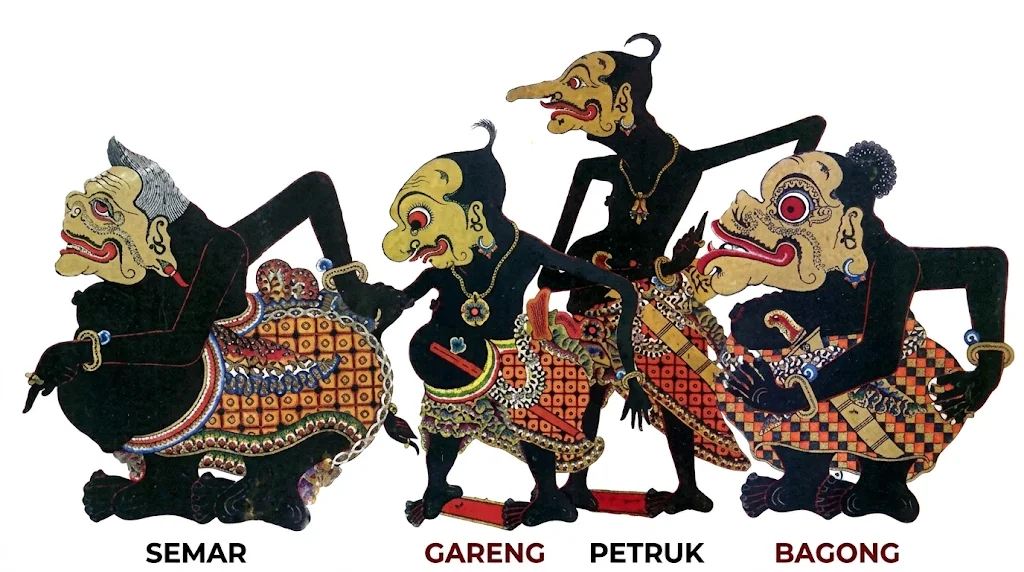
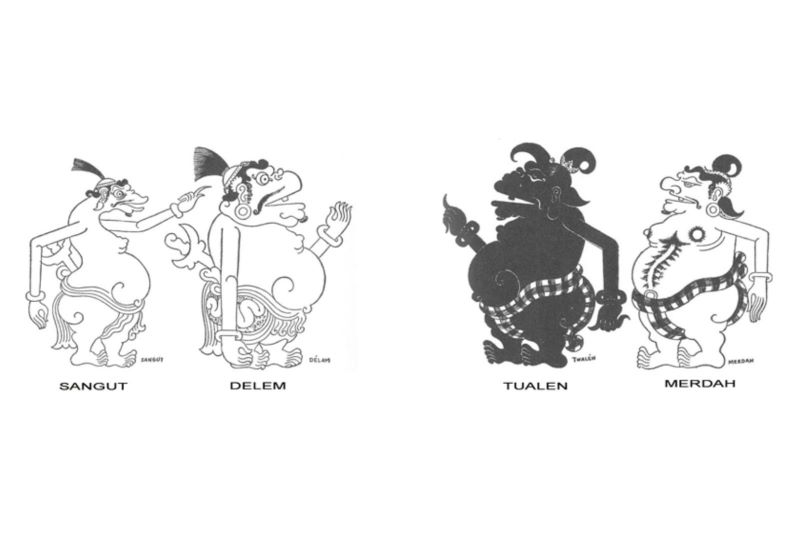
Wayang is an indigenous element of Indonesian culture that existed prior to the arrival of Hindu culture in Indonesia. This is evidenced by the presence of panakawan (clown-servant) characters—Semar, Gareng, Petruk, and Bagong in Javanese wayang, and Twalen, Merdah, Delem, and Sangut in Balinese wayang—who do not exist in the wayang traditions of any other country. As an art form cherished by Balinese society from era to era, wayang is typically associated with religious ceremonies, such as Yadnya (sacred offerings/sacrifices) or other specific celebrations.
Shadow puppet performances, representing the arts of tatah (leather carving) and painting, have been known to the people since 896 CE during the reign of King Ugrasena as a highly popular art form. This is recorded in an Ugrasena inscription preserved in Bebetin village, Singaraja, which mentions pamukul (gamelan musicians), pagending (singers), pabunjing, papadaha (kendang drummers), pabangsi (rebab players), partapukan (masked dancers), and parbwayang (wayang performances). Additionally, the Pandak Badung inscription of King Anak Wungsu from 1071 CE mentions pamukul (gamelan players), anuling (flute players), atapukan (masked performances), abanwal (comedians), pirus (clowns), menmen (drama), ringgit (wayang), and so forth.
The oldest surviving form of wayang in Bali can be seen as a relief on a bronze plaque depicting Semara-Ratih, preserved alongside King Anak Wungsu’s inscription from 1071 CE as a hanging ornament on a lontar manuscript. Another discovery of wayang in the form of a painting of Bhatara Guru on an inscription dated 1204 CE is now housed at Pura Kehen, Bangli. Based on these discoveries, it is clear that wayang art was already popular in Bali during the reigns of pre-Hindu rulers and reached its golden age during the kingdom of Dalem Waturenggong around the 15th century CE. Alongside wayang kulit (shadow puppets), wayang topeng / wayang wong (masked/human dance drama), statues, and reliefs, wayang in the form of painting became immensely popular and flourished rapidly.
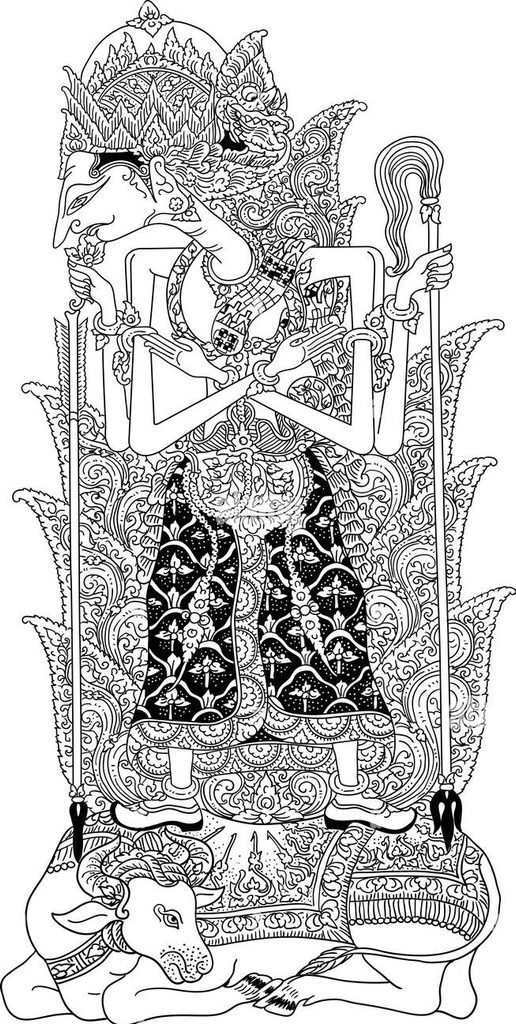
Wayang painting—formerly known as melukis wong-wongan (painting human figures)—is a classical style of painting that continues to play a major role in Balinese artistic life today. Specifically, this painting tradition developed and became deeply rooted in Kamasan village, Klungkung, beginning in 1686 CE, when King Dalem Klungkung paid close attention to, patronized, and mentored the painters. Through this royal patronage, Sangging Modara and several other Kamasan painters gained renown and received honors from the king in the form of honorary titles or bukti-bukti (arable land grants) such as rice fields, dry fields, and other precious objects as rewards.
At that time, paintings were regarded as priceless gifts presented to vassal kings of Klungkung—such as Karangasem, Mengwi, Badung, and other kingdoms—by dispatching Sangging Gede Modara to decorate pura (temples), pamerajan (family shrines ), and royal palaces. This patronage enabled the classical style to spread throughout Bali.
The arrival of Dutch and Japanese colonizers introduced new influences on the development of both the form and function of this painting art. Over its long history, wayang painting evolved in response to surrounding situations, conditions, and needs. Each period—the royal era, the colonial era, and the post-independence era—exhibits distinct characteristics. Upacara and Upakara (Religious ceremonial and ritual ) requirements continue to sustain the tradition of melukis wong-wongan, while in the modern era of development, technological progress and tourism act as external forces significantly influencing artists who create works for tourism, whether as decorations, souvenirs, or other functional items.