JAKARTA – The Festival Film Indonesia 2026 (Indonesian Film Festival) /FFI Award Night gave filmmakers a stage to celebrate their work while voicing their worries, critiques, and hopes for Indonesia. On Friday, November 20, 2026, the organizers held the event at the Jakarta International Expo in Kemayoran, Jakarta. The theme Askala Karya Sinema Indonesia truly found its meaning during this ceremony. Filmmakers on stage did not just express gratitude for their trophies. Instead, they also used the moment to share their deep concerns about current events in the country. The Sanskrit word Askala means light, rays, and hope. Therefore, the festival placed films as a medium that carries hope forward.
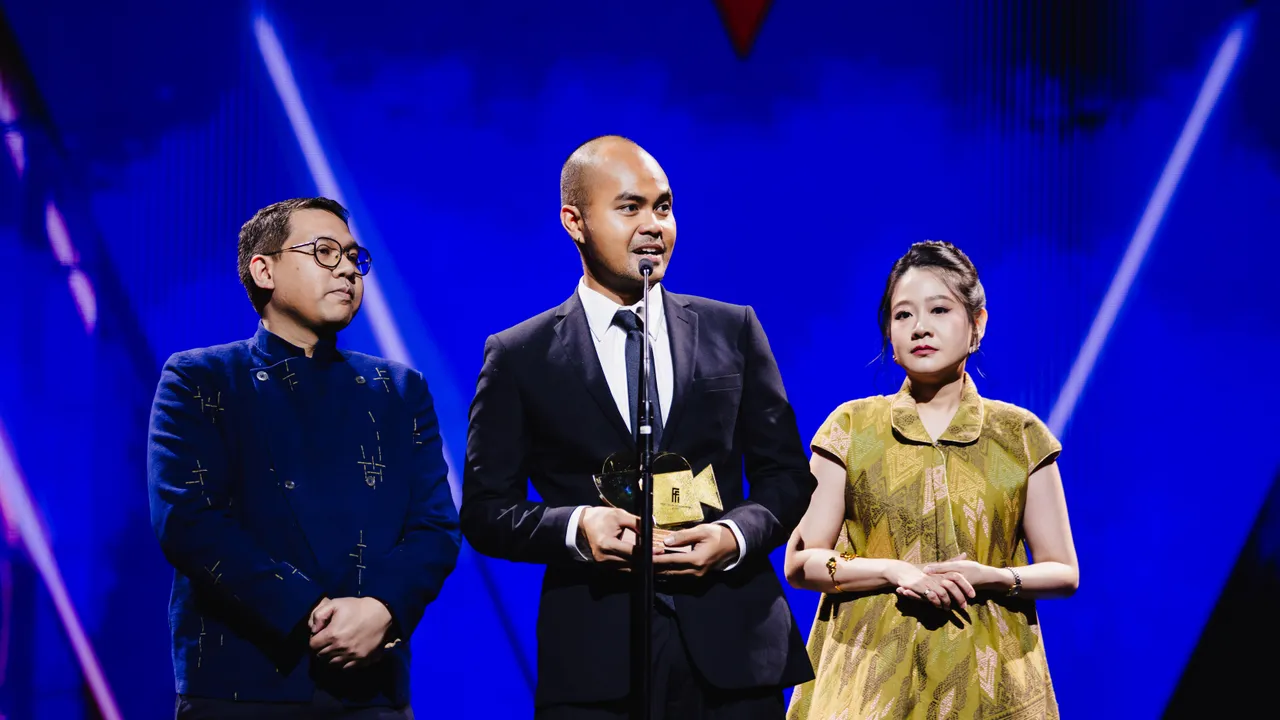
First, the Best Short Animated Film category kicked off the night with a win for Enigma Wajah Arca. R Braja Restu wrote the poem that inspired this animated movie. In the story, social standards slowly destroy a person’s true identity. Director Kresensia Adellitha Devalia expressed her wish that everyone who watches Enigma Wajah Arca always finds a reason to grow and survive despite everything that tries to bring them down. Afterward, she and her team raised a three-finger salute as they left the stage. Next, Dihapus dari Peta won the Best Short Live-Action Film award. This movie tells a story about the impacts of a new city from a child’s point of view. Once again, the winners raised a three-finger gesture, and the audience answered with the exact same sign.
Three Messages and Three Fingers
Moving on, Kawai Labiba won Best Supporting Actress for her role as Melodi in Operasi Pesta Copet. Her spontaneous acting style kept the audience engaged with her antics. While swinging three fingers into the air, Kawai shared her three hopes for the future. First, she hoped this win would mark the start of a sincere journey. Second, she wished for Indonesian cinema to keep moving forward. Third, she prayed for Indonesia to heal soon. Consequently, her speech showed how the young generation pays close attention to national issues. They highlight these problems both through their creative works and through their messages at the FFI 2026.
Meanwhile, Aming won Best Supporting Actor for his role as Tokek. He dedicated his Citra Trophy to marginalized people, misunderstood individuals, and the animals living in burning forests. Furthermore, he dedicated the award to humanity, a better Indonesia, and the future of our children. In addition, Aming added a special message opposing the relocation of Javan rhinos (Rhinoceros sondaicus) from Ujung Kulon National Park in Banten to Alas Purwo National Park in East Java. He stressed that Ujung Kulon already sits at the very edge, so authorities should not move the rhinos anywhere else. Earlier, on Thursday, November 12, 2026, President Prabowo Subianto’s younger brother announced this relocation plan during the UN Climate Change Conference (COP31) in Antalya, Turkey. The government created this plan to protect the Javan rhinos from natural disasters like tsunamis and eruptions from Mount Anak Krakatau. However, historical records prove that Javan rhinos survived the massive 1883 Krakatau eruption and the giant tsunami that followed it. Similarly, another actor who played Tria in Jangan Buang Ibu shared three urgent requests. First, she urged the industry to build a healthy filming environment. Second, she asked everyone to prioritize forest and land fires. Third, she demanded that officials keep the Javan rhinos in place and tighten their security instead.
Cinema as a Stage of Resistance
Next, Joko Anwar won Best Director for his film Ghost in the Cell, bringing his career total to 23 nominations and five Citra Trophies. During his speech, he pointed out how Indonesia’s condition worsens every single day. He criticized normalized corruption and deliberate forest fires. Therefore, Joko called on fellow filmmakers to step up and help heal the nation. He reminded everyone that filmmakers can create vocal movies that raise public awareness about the need to take action. Moreover, the director from Medan, North Sumatra, explained that commercial movies and vocal movies carry the exact same risk of failing at the box office. Thus, he encouraged creators to make meaningful films rather than just chasing market trends, and he raised three fingers in the air. His winning movie, Ghost in the Cell, follows prisoners with different criminal backgrounds who initially clash with one another. Eventually, however, these inmates work together to survive. Ultimately, Ghost in the Cell swept five Citra Trophies, including Best Director, Best Cinematography, Best Actor, and Best Supporting Actor.
On the other hand, Para Perasuk won Best Feature Film. Siera Tamihardja, Iman Usman, and Amalia Rusdi produced this movie under Rekata Studio. The story draws inspiration from Pesta Sambetan, a spirit-possession festival that entertains and shapes the daily lives of people in Latas Village. However, the film expands the idea of possession beyond magic. It uses possession as a metaphor for how expectations, ambitions, and unhealed wounds can take over human lives. On stage, producer Siera Tamihardja loudly criticized the government for denying the 1998 mass rapes. Directly addressing Minister of Culture of Indonesia Fadli Zon, she called the denial of the 1998 mass rapes a disgusting act that lacks empathy. Therefore, she thanked cinema for serving as a multi-perspective medium that builds empathy among both creators and viewers. Together, all three producers raised three fingers into the air.
Kartini in Cinema
Besides acting as a stage for criticism and aspirations, FFI 2026 also highlighted female pioneers and young curiosity, such as the curious young girl character Willa. Speaking of Kartini, the newspaper Berita Yudha Minggu once named pioneering female director Ida Farida the “20th-Century Kartini” in its October 11, 1981 edition. Sadly, Ida Farida passed away this year. She began her career as a journalist before entering the film industry as a script supervisor, assistant director, and eventually a director who led the film set. Consequently, the festival honored Ida Farida with the Lifetime Achievement Award for Film. This trophy honors her long journey in opening doors for women in the movie industry.
In the end, the FFI Award Night now means much more than a simple celebration of Indonesian film achievements. The Citra Trophies that winners carry home serve as clear proof of the filmmakers’ deep worry over a nation that is currently not doing well.
Photo doc. Kompas.com