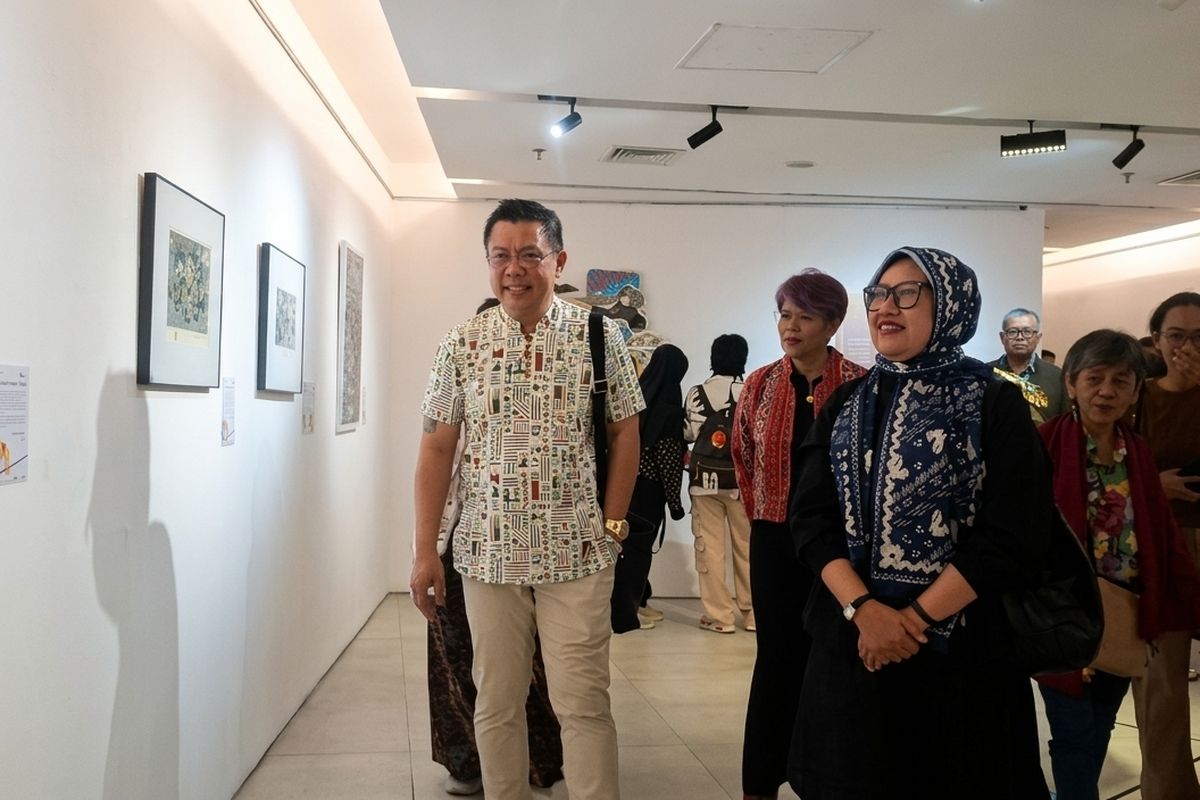
JAKARTA – The Faculty of Art and Design at the Jakarta Arts Institute (FSRD IKJ) is holding its annual art exhibition. The organizers have upgraded this long-running event to an international scale to preserve creative freedom and expand global networks. The exhibition is titled Urban Art Expression: Beyond Classroom. The organizers officially opened the event at Galeri Cipta 1 and 2, Taman Ismail Marzuki (TIM), Jakarta, on Tuesday, November 3, 2026. The public can visit the exhibition for the next week.
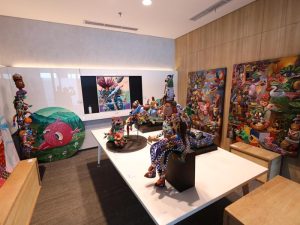
This regular exhibition started back in 1997. This year, the event features 41 best works from 40 FSRD IKJ lecturers. In addition, the event involves guest artists from five friendly countries: Malaysia, Uruguay, Ukraine, Colombia, and the United States.
The Dean of FSRD IKJ, Adlien Fadlia, delivered an opening speech during the event. She emphasized that this year’s theme closely reflects the institution’s core vision. The institution naturally grows within the dynamic pulse of Jakarta. Furthermore, Adlien explained that urban space is not just a dense physical landscape. Instead, it serves as a social arena full of shifting values, challenges, and complex human interactions.
Through various perspectives, materials, media, and techniques, the 41 works express critical attitudes toward city life dynamics. Moreover, these works inspire lecturers to improve institutional quality and global networks. Starting in 2026, FSRD IKJ has expanded the exhibition internationally by inviting foreign artists. Consequently, this step aligns with the Ministry of Higher Education, Science, and Technology’s policies. These policies focus on strengthening practice-based research, global innovation, and key university performance indicators.
Meanwhile, exhibition curator Citra Smara Dewi highlighted the core spirit of the event, which is artistic freedom. She explained that the exhibition offers a fresh alternative to the uniform art shows across Jakarta. Most importantly, the lecturers create their artwork without market pressures. Therefore, artists express their personal and urban feelings without worrying about commercial sales. As a result, they achieve total creative expression without financial stress.
Similarly, curator and alumnus Anna Sungkar noted that the selection process was much stricter this year. The committee aimed to filter out the very best masterpiece from each lecturer. Each artist selected and presented their own top creation. The curators then managed the event and organized the limited display space.
The exhibition presents five main creative themes throughout the galleries. First, several artists focus their works on social, political, and human realities. For instance, Dionisius Bowo Purnomo presents Teman Perjalanan to observe social dynamics inside commuter trains. Meanwhile, Dodi Triaviandi features Tujuh Dekade Jejak Penjaga Konstitusi & Keadilan, and Colombian artist Santiago Escobar-Jaramillo presents a reflection on global humanity.
Second, the artists explore tradition, cultural memory, and local identity. Muhamad Fahmi showcases the rich visual heritage of Indonesia through Spectrum of Batavia. On the other hand, Iwan Amir presents Triswara, which combines Betawi motifs with his personal life experience in Jakarta.
Third, other works touch upon self, memory, and inner journey. Nicholas Wila Adi presents a shoe installation that tells a story of personal healing after an illness, while Ukrainian artist Vitalii Hrekh also explores similar personal experiences.
Fourth, the artists examine the relationship between humans and nature as well as cycles of justice. Hafizh Al Fikri presents a sculpture titled Aeolian Sculptures, and Boedhatmaka Darsono displays Resilience.
Finally, the fifth theme presents imagination, visual experimentation, and medium exploration. Anindyo Widito features Art Nouveau interior design, while Arryadianta presents a digital visual experiment titled Glitch.
Through this international event, FSRD IKJ proves that an art institution does not only educate students inside traditional classrooms. Instead, the campus acts as a living cultural hub. Ultimately, it actively nurtures critical thinking, strengthens international cultural dialogue, and presents high-quality artwork for public appreciation.
Photo doc. Kompas.com