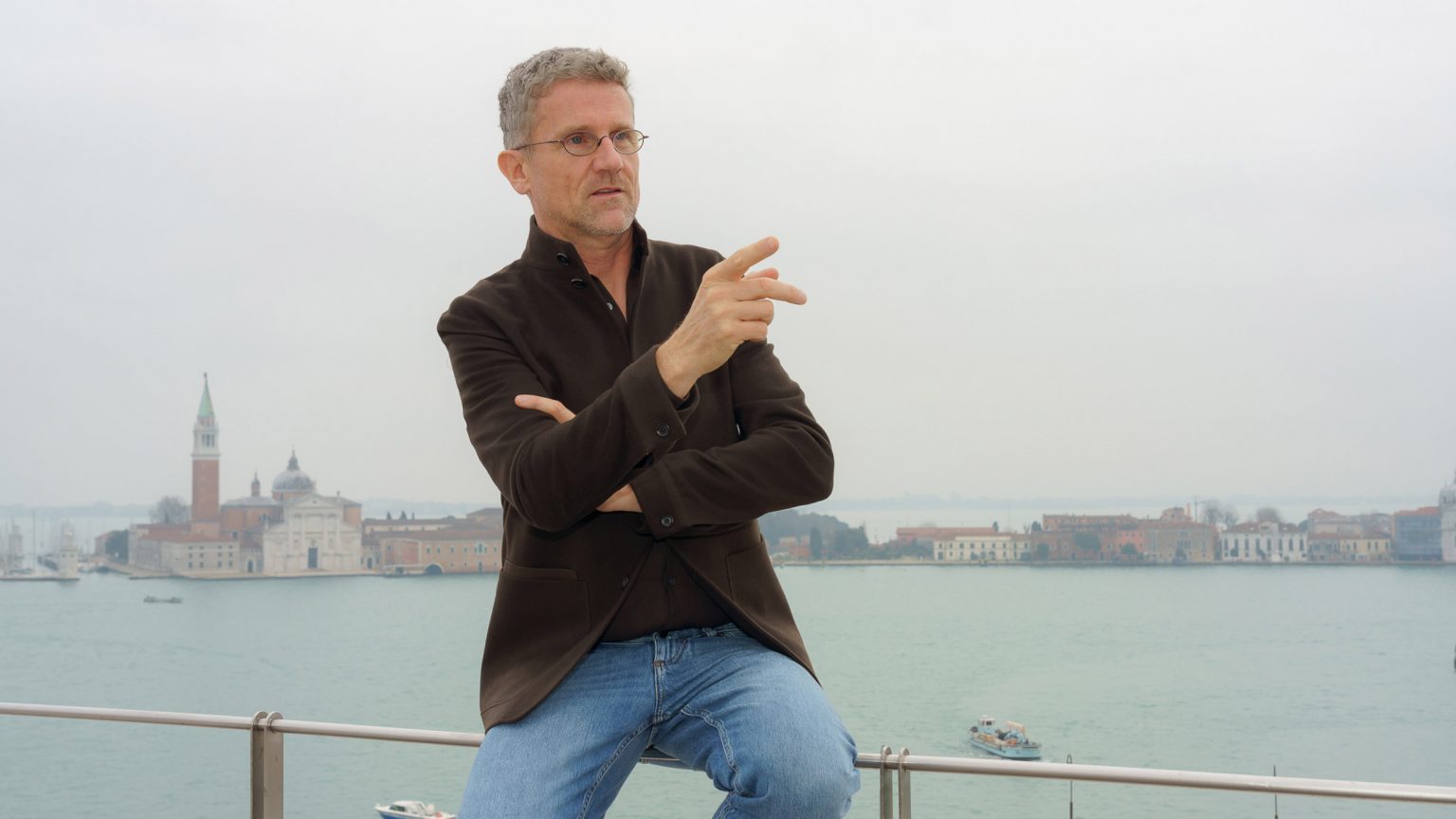
JAKARTA – Organizers have named Italian architect Carlo Ratti as the curator of next year’s Seoul Biennale of Architecture and Urbanism, for which he plans to take “an unconventional, AI-based” approach. Starting on 24 September 2027, Ratti will use the biennale as an opportunity to question the role of a curator today through the lens of architecture. However, the organizers will not unveil the event’s title, theme, and full curatorial team until 8 December.
One assistant curator isn’t even human
So far, Ratti has revealed that he plans to take “an unconventional, AI-based” approach to the event. Specifically, he will use an AI assistant to challenge traditional exhibition development methods by highlighting emerging tools that help curators. “I am delighted to take on the direction of the Seoul Biennale and to explore the future of cities together with the Seoul Metropolitan Government,” says Ratti. Furthermore, he continued, “Seoul is perhaps the best place in the world to ask how artificial intelligence and the collective wisdom of its citizens might shape the city together”. In addition, he stated, “At the upcoming pre-biennale event, we will begin to introduce the people who will join us, and I think there will be a few surprises – one assistant curator isn’t even human!” Currently, Ratti works as an Italian architect, an engineer, and the director of his eponymous studio, Carlo Ratti Associati. Moreover, he teaches as a professor at the Massachusetts Institute of Technology (MIT).
Seoul mayor Oh Se Hoon appointed Ratti, who succeeds British designer Thomas Heatherwick as the curator of the 2025 event. Previously, Heatherwick centred the event on a long, four-storey-high wall that displayed images reflecting the ideals of his Humanise campaign. Historically, the Seoul Metropolitan Government established the Seoul Biennale in 2017 as a festival.
About Carlo Ratti
Carlo Ratti is widely known as an architect, engineer, and MIT professor who frequently pushes the boundaries between the physical world, nature, and digital data. Through his studio, CRA–Carlo Ratti Associati, he doesn’t merely design static buildings; he creates interactive, ‘living’ spaces attuned to human needs. One of his most iconic breakthroughs is CapitaSpring in Singapore, a 280-meter skyscraper designed in collaboration with Bjarke Ingels Group (BIG) that appears to split open in the middle to make room for a four-story vertical garden and the world’s highest urban farm. He also took this approach of weaving nature into living spaces to the extreme with The Greenary in Italy, a farmhouse built around a living, 10-meter-tall ficus tree growing right in the center of the living room.
For Ratti, technology in architecture should make buildings more responsive without wasting energy. He brought this concept—which he calls Senseable Cities—to life in the renovation of the Agnelli Foundation headquarters in Turin. Rather than running air conditioning and lights all day, this historic building connects to employees’ smartphones via a network of smart sensors that automatically adjust temperature and lighting only in occupied zones. A similar sensory innovation captivated the world at the Digital Water Pavilion in Zaragoza, Spain, where solid walls were entirely replaced by computer-controlled curtains of water that parted automatically whenever visitors walked through, allowing anyone to enter without getting wet.
Ratti’s experiments also extend into sustainability, circular materials, and global-scale events. In Milan, he unveiled The Circular Garden, an exhibition pavilion whose entire arched structure was ‘grown’ from mushroom roots (mycelium) over six weeks and immediately recycled into soil compost once the event ended, leaving zero construction waste. His reputation on the international stage grew even stronger when he was tapped to design the recycled torches for the 2026 Milano Cortina Winter Olympics, curate the 2025 Venice Architecture Biennale, and appoint an artificial intelligence (AI) assistant as his primary co-curator for the 2027 Seoul Biennale of Architecture and Urbanism.
Photo doc. dezeen.com